Quick Answer
A dental deep cleaning removes plaque and tartar from below the gumline to treat early gum disease and prevent further damage to teeth and gums.
Best for:
Patients with bleeding gums, bad breath, or gum recessionTreatment time:
1–2 visits depending on severityResults:
Healthier gums and prevention of gum diseaseOn This Page
Most people focus on keeping their teeth white and cavity-free, but healthy gums are equally important for maintaining a strong and healthy smile. Unfortunately, gum disease is extremely common and often develops slowly without causing major pain in the beginning. Many patients ignore the early warning signs until the condition becomes serious.
The good news is that early treatment can help prevent long-term damage. A professional dental deep cleaning removes harmful bacteria and plaque from beneath the gumline before gum disease progresses. Recognizing the symptoms early can help protect your teeth, gums, and overall oral health.
Understanding Gum Disease
Gum disease, also called periodontal disease, is an infection of the tissues surrounding the teeth. It usually starts when plaque and bacteria build up along the gumline. Without proper cleaning, the bacteria irritate the gums and cause inflammation.
The earliest stage of gum disease is called gingivitis. At this stage, symptoms are usually mild and may include redness, swelling, or bleeding gums. If left untreated, gingivitis can progress into periodontitis, a more serious condition that damages the gums and bone supporting the teeth.
What Is a Dental Deep Cleaning?
A regular dental cleaning focuses on cleaning the visible surfaces of the teeth above the gumline. A deep dental cleaning, however, targets plaque, tartar, and bacteria below the gums where regular brushing and flossing cannot reach.
Deep cleaning typically includes two important steps:
- Scaling — Scaling removes plaque and hardened tartar from the teeth and beneath the gumline.
- Root Planing — Root planing smooths the root surfaces of the teeth to help the gums reattach properly and reduce bacterial growth.
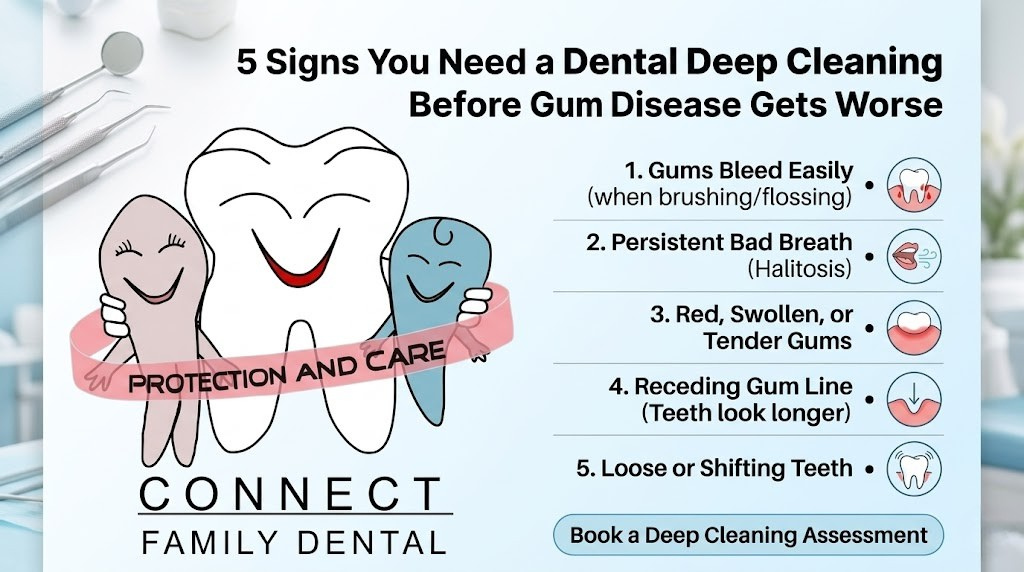
1. Your Gums Bleed When Brushing or Flossing
One of the earliest and most common signs of gum disease is bleeding gums. Many people assume occasional bleeding is normal, especially when flossing, but healthy gums should not bleed regularly. Bleeding usually happens because bacteria and plaque irritate the gum tissue, causing inflammation. You may notice pink or red areas while brushing or see blood after flossing.
Additional symptoms may include swollen gums, tender gum tissue, redness around teeth, and mild discomfort while brushing. A professional deep dental cleaning can remove the plaque and tartar causing the irritation and help restore healthier gums.
2. Persistent Bad Breath That Does Not Go Away
Bad breath can sometimes be caused by food, coffee, or dry mouth, but chronic bad breath that continues even after brushing may be linked to gum disease. When bacteria collect below the gums, they release unpleasant odors that are difficult to eliminate with mouthwash alone. Professional gum disease treatment helps remove the bacteria responsible for the odor while improving overall oral hygiene.
3. Your Gums Are Receding
Healthy gums fit firmly around the teeth. If your gums appear to be pulling away from your teeth or your teeth suddenly look longer, you may have gum recession. Gum recession occurs when infection damages the gum tissue surrounding the teeth. This creates pockets between the teeth and gums where additional bacteria can collect.
Common signs of receding gums include increased tooth sensitivity, teeth appearing longer, pain while eating hot or cold foods, and spaces forming near the gumline. If gum recession continues untreated, it can eventually expose the tooth roots and increase the risk of tooth loss.
4. Tartar Buildup Around the Gumline
Plaque naturally forms on teeth every day, but when it is not removed properly, it hardens into tartar. Unlike plaque, tartar cannot be removed through brushing alone. Tartar buildup often appears as yellow or brown deposits near the gums and creates a rough surface where bacteria can continue growing. Professional cleaning removes hardened deposits safely and helps prevent further gum infection.
5. Your Teeth Feel Loose or Sensitive
As gum disease progresses, it begins affecting the bone and tissue supporting the teeth. This can make teeth feel loose or uncomfortable while chewing. Many patients also experience tooth sensitivity because gum recession exposes the tooth roots. These symptoms should never be ignored. Advanced gum disease can eventually lead to permanent tooth loss if left untreated.
Why Early Gum Disease Treatment Is Important
Gum disease does not only affect your mouth. Research has shown that poor gum health may also be connected to other health conditions, including heart disease, diabetes complications, inflammation throughout the body, and increased risk of infection. Treating gum disease early can improve both oral health and overall wellness.
What Happens During a Dental Deep Cleaning Appointment?
During the appointment, your dentist may examine your gums carefully, measure gum pocket depth, remove plaque and tartar, clean beneath the gums, smooth the tooth roots, and provide aftercare instructions. Depending on the severity of gum disease, treatment may be completed in one or multiple visits. Most patients experience only mild soreness afterward, which usually improves within a few days.
Frequently Asked Questions
Does a dental deep cleaning hurt?
Most patients experience minimal discomfort. Local anesthesia may be used to keep the procedure comfortable.
How long does gum disease treatment take?
Treatment depends on the severity of the condition. Mild cases may require one visit, while advanced cases may need multiple appointments.
Can bleeding gums go away naturally?
Occasional irritation may improve, but persistent bleeding gums often require professional dental treatment.
How often should I get a professional dental cleaning?
Most patients should schedule cleanings every six months, though some may need more frequent visits based on gum health.